
TL;DR
- EG shows strong laning but struggles with midgame coordination and decision-making
- Team Secret suffers from role confusion and greedy core lineup without proper space creation
- Ceb identifies Puppey as the GOAT for sustained excellence and unmatched skill
- Nigma’s issues stem from KuroKy’s declining laning phase proficiency
- Strategic insights reveal common team composition pitfalls and improvement pathways
Games and Esports Articles Dota 2
Dmitrii Barabanov
April 17, 2022, 21:47 SGT
During a recent streaming session with professional player qojqva, former OG champion Sebastien “Ceb” Debs provided expert commentary on the NA DPC 2022 Spring league match between EG and TSM. The discussion evolved into a comprehensive analysis of professional team dynamics, covering Arteezy’s gameplay patterns, Team Secret’s structural challenges, and the enduring legacy of Puppey as the greatest of all time. This session revealed crucial insights into professional Dota 2 team management and player development.
Ceb: I can see glimpses of something that I guess EG is trying in the laning phase and stuff. It feels like they just lost to TSM because TSM was better, but I don’t think that tells the story. EG are on their way to playing very well, but they need to improve in the midgame. Their post-laning phase is a bit weak. But the laning is good.
Qojqva: I feel like all the players know what to do. Maybe, they have different opinions on it. And they end up doing two things at 50%.
Ceb: Yeah, that’s what it looks like.
Professional teams often face the challenge of transitioning from strong individual performances to cohesive team execution. Ceb’s observation highlights a common pattern where teams with excellent mechanical skills struggle with synchronized decision-making during the critical midgame phase where objectives and team fights determine match outcomes.
Arteezy demonstrates world-class laning capabilities but faces criticism for what Ceb describes as a “one-dimensional” approach to gameplay. The French analyst noted that Artour frequently “doesn’t look at the game for what it is,” suggesting a need for broader strategic awareness beyond individual lane dominance.
He’s still stable. He’s one of the best laners as far as I’m concerned. He was always one of the toughest carries to lane against. But I think he has a flawed vision of Dota. I don’t understand how he plays sometimes. I disagree with how he plays a lot of the games. But if I had to name someone who can help him to get on the next level, it’d be JerAx. If he listens to him.
The potential partnership with JerAx represents a strategic opportunity for EG to bridge their laning excellence with more sophisticated midgame strategies. This analysis provides valuable insights for teams struggling with similar transition phases between early and mid-game execution.
Team Secret
During their analytical discussion, Ceb made the surprising assertion that SumaiL should not occupy the position one role, despite having previously selected him for exactly that position during the TI10 qualifiers where they achieved a 7-8th place finish. This perspective challenges conventional wisdom about player role assignments in professional Dota 2.
I think SumaiL is a great player. I don’t think he should be carrying this way. I’ve played with him carrying a lot, but I don’t think he should carry. I’m not saying he’s not good enough for that. There are a lot of reasons for that. I think he’s confused when he’s playing carry. Like he overthinks a lot. When I saw them [Secret] switching roles, I really hoped he would prove me wrong.
The core lineup composition presents significant challenges, with both Nisha and SumaiL both favoring farming-intensive playstyles without adequate space creation support. This creates a fundamental imbalance in team resource distribution and map control dynamics.
Iceiceice represents a similar stylistic preference, and Ceb believes his approach doesn’t synergize effectively with the team’s overall strategy.
Iceiceice is playing well but he doesn’t fit with other players. They see the game differently, I can see it. Iceiceice sees the game in a certain way and other cores. <…>
The way iceiceice plays is that he applies a lot of pressure in a greedy way. And he needs his cores to punish enemies when they’re trying to f*ck with him. SumaiL and Nisha will never do it. They play for themselves.I think ice’s prime was with China because they are so disciplined. They don’t think selfishly, they just punish. It was a long time ago, but I remember even when he was playing in Vici Gaming, they would punish [the opponents]: iceiceice and his Timber are doing some dumb shit, and you go on him because “What the f*ck is he doing”, and his team is there, and you lose the game. With Secret, you can just kill him for free and they are not reacting. He can be top net worth and then he dies twice and suddenly the game is just done. I don’t know if I want to put the blame on him. Sure, he could just play like every other offlaner, but…
This analysis reveals a critical lesson in team composition: successful rosters require complementary playstyles rather than accumulating individually talented players with overlapping strategic preferences.
YapzOr appears to be performing at a reduced effectiveness compared to previous seasons. This contrast becomes particularly evident when examining Puppey’s consistent performance. Ceb couldn’t identify any other professional player who has maintained such elite performance levels over such an extended competitive career.
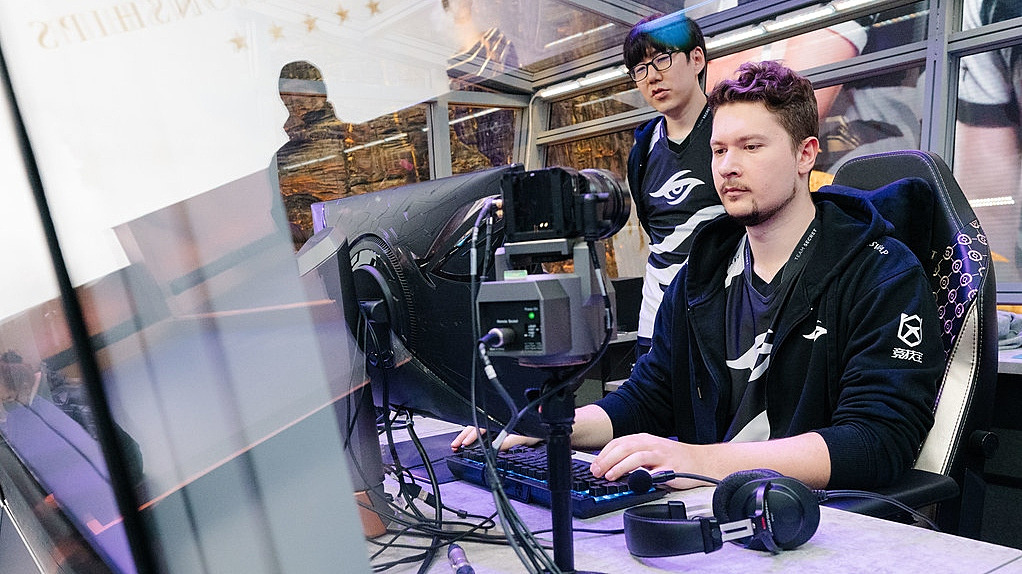
It doesn’t feel like Puppey can get burned out, even though of course he can. Whereas Yapzor is probably more of a follower. <…>
Dude, Puppey is so good. He is so skilled as a five, it’s crazy. And also, he was never been, like, carried. A lot of players at some point start being a little worse, but they don’t show as much because they are so smart about their game. Of course, he is smart too, but he never got carried, he’s just delivering every game. If I had to name a GOAT, it would probably be Puppey. <…> Because when I started Dota, he was already Puppey, you know. He was already Puppey, he was already crushing everyone, winning every tournament and stuff. This guy is like a legend.
Puppey’s career exemplifies sustainable excellence in esports, demonstrating how technical skill combined with strategic intelligence creates lasting competitive advantage. His ability to adapt across multiple Dota 2 metas while maintaining individual impact sets a benchmark for professional longevity.
Nigma Galaxy
Ceb’s assessment suggests that KuroKy may be losing his competitive edge or dedicating insufficient time to preparation. This conclusion emerged from careful observation of Nigma’s laning phase execution, which often reveals fundamental issues in player preparation and meta understanding.
Honestly speaking, I feel like lower games are hard for iLTW because Kuro f*cks up on lanes a lot. For me, when a player is not on par with the meta, when he doesn’t work hard, you see it in the laning stage most of the time. For pros at least. Because lanes are about the small things and how well you know them, how much you play, honestly. All the items you buy, the timing on the lane…
The laning stage serves as a critical diagnostic tool for assessing professional player preparation. Small details like itemization choices, creep equilibrium management, and trading patterns reveal the depth of a player’s engagement with current meta strategies and their dedication to mastering fundamental mechanics.
EG concluded their series against TSM with a 1:2 defeat. Both teams continue competing for Major qualification positions during the final round of NA DPC Spring, potentially resulting in complex tiebreaker scenarios.
Nigma faced relegation to division 2 within the European competitive scene. Team Secret narrowly avoided similar consequences and maintains potential qualification pathways to the Major tournament.
Beyond specific team analyses, Ceb’s commentary reveals broader patterns in professional Dota 2 team construction. The most successful rosters typically feature players with complementary rather than overlapping strategic approaches. Teams should carefully consider how individual player styles interact rather than simply accumulating mechanically skilled players.
Strategic awareness extends beyond individual lane performance to encompass map-wide coordination and objective timing. The transition from laning phase to midgame represents a critical juncture where many talented teams struggle to maintain competitive advantage.
For teams looking to improve their competitive standing, focusing on midgame coordination and developing shared strategic frameworks often yields greater returns than simply improving individual mechanical skills.
Action Checklist
- Analyze laning phase execution for indicators of player preparation and meta understanding
- Evaluate midgame transition patterns and team coordination during objective fights
- Assess role compatibility and strategic alignment between core players
- Identify complementary playstyle combinations for optimal team composition
No reproduction without permission:Game Guides » Ceb gives his take on Nigma and EG issues, names Puppey the GOAT of Dota Professional Dota 2 insights: Ceb analyzes EG's midgame flaws, Secret's role conflicts, and Puppey's legendary status