
TL;DR
- Cyrus enables targeted bench control by forcing damaged Pokémon into active position
- Superior to Sabrina by removing opponent choice in switching decisions
- Counters glass-cannon and stall strategies by denying safe retreat options
- Creates knockout chains when combined with direct bench damage cards
- Requires precise timing and target selection for maximum effectiveness
Cyrus transcends his villainous origins to become a strategic powerhouse in Pokémon TCG Pocket. This formidable trainer card has fundamentally shifted competitive battle dynamics since its introduction in the Space-Time Smackdown expansion.
Cyrus represents more than just another trainer option—it’s a meta-defining card that challenges conventional retreat strategies. Originally appearing as Team Galactic’s sinister leader in the Sinnoh video games, his TCG incarnation brings equally disruptive energy to the battlefield by manipulating opponent positioning.
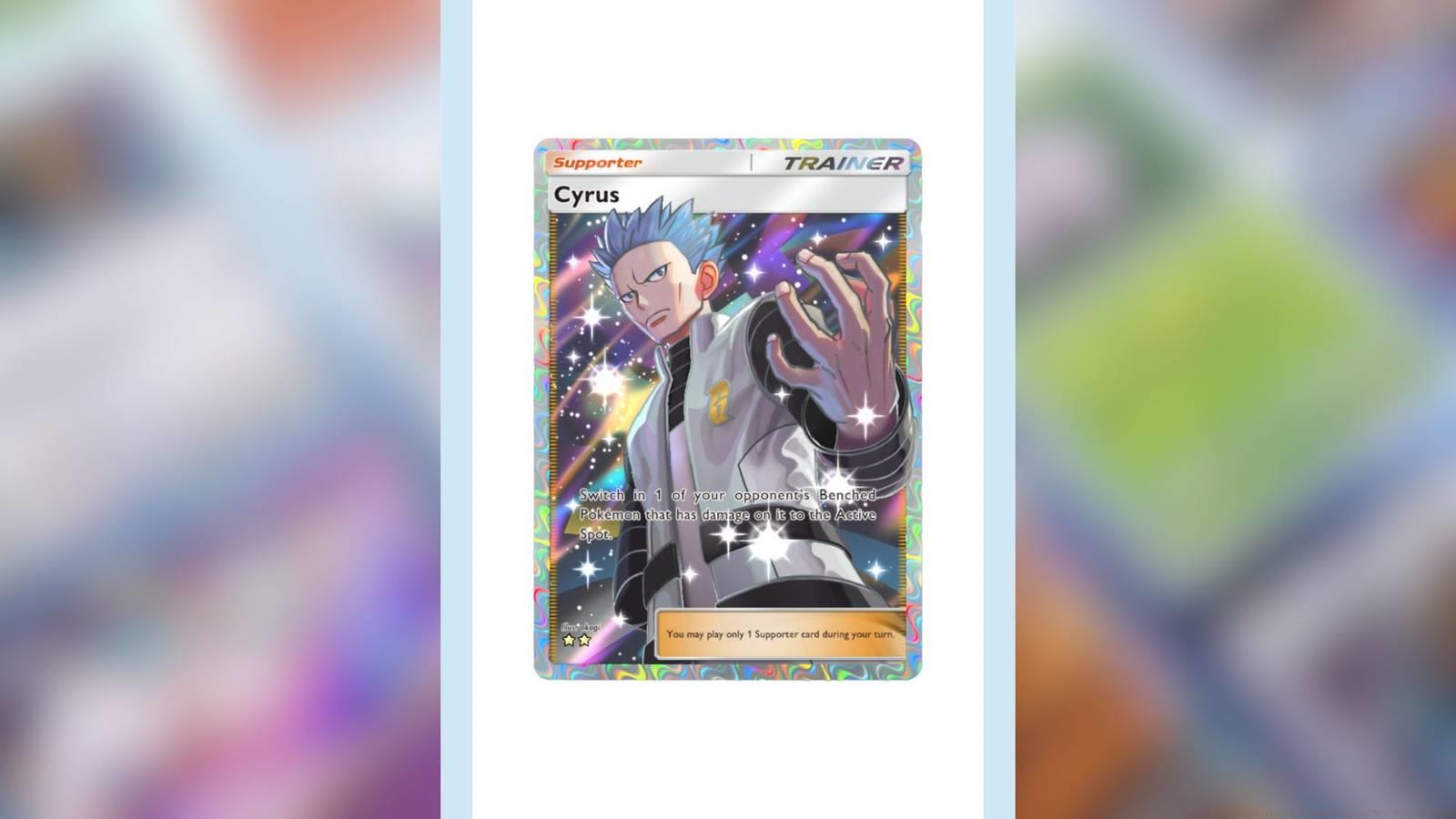
What makes Cyrus exceptionally valuable is his ability to punish damaged Pokémon attempting to escape to safety. Unlike many situational cards, his effect applies broadly across numerous deck archetypes, making him a versatile inclusion for players seeking consistent competitive advantage.
The mechanical elegance of Cyrus lies in its straightforward yet devastating effect: “Switch in 1 of your opponent’s Benched Pokémon that has damage on it to the Active Spot.” This single-sentence ability belies profound strategic implications that reward careful gameplay.
Activation timing proves crucial—you can deploy Cyrus once per turn before declaring your attack phase. This sequencing allows you to manipulate the battlefield state immediately before executing your primary offensive actions. When multiple damaged Pokémon occupy your opponent’s bench, you gain selective control over which target becomes vulnerable.
Advanced Tip: The damage requirement creates natural synergy with spread damage strategies. Cards like Articuno ex that distribute damage across multiple targets effectively prime opponents for Cyrus activation, transforming partial damage into guaranteed knockouts.
Strategic depth emerges from understanding that Cyrus doesn’t just move Pokémon—it denies recovery opportunities. Opponents cannot use healing items, abilities, or retreat costs to protect damaged Pokémon once they’re forcibly returned to active position, creating irreversible advantage states.
While several cards threaten bench security, Cyrus operates uniquely compared to alternatives like Lumineon, Zebstrika, or Articuno ex. These cards typically inflict direct damage to benched Pokémon but lack the positional control that defines Cyrus’s game-changing potential.
Lumineon‘s Aqua Liner delivers 50 damage to a single bench target, while Articuno ex‘s Blizzard attack spreads 80 damage to the active Pokémon plus 10 to each benched Pokémon. These effects certainly pressure opponent resources but remain counterable through healing cards like Potions or supporter effects like Erica’s Invitation.
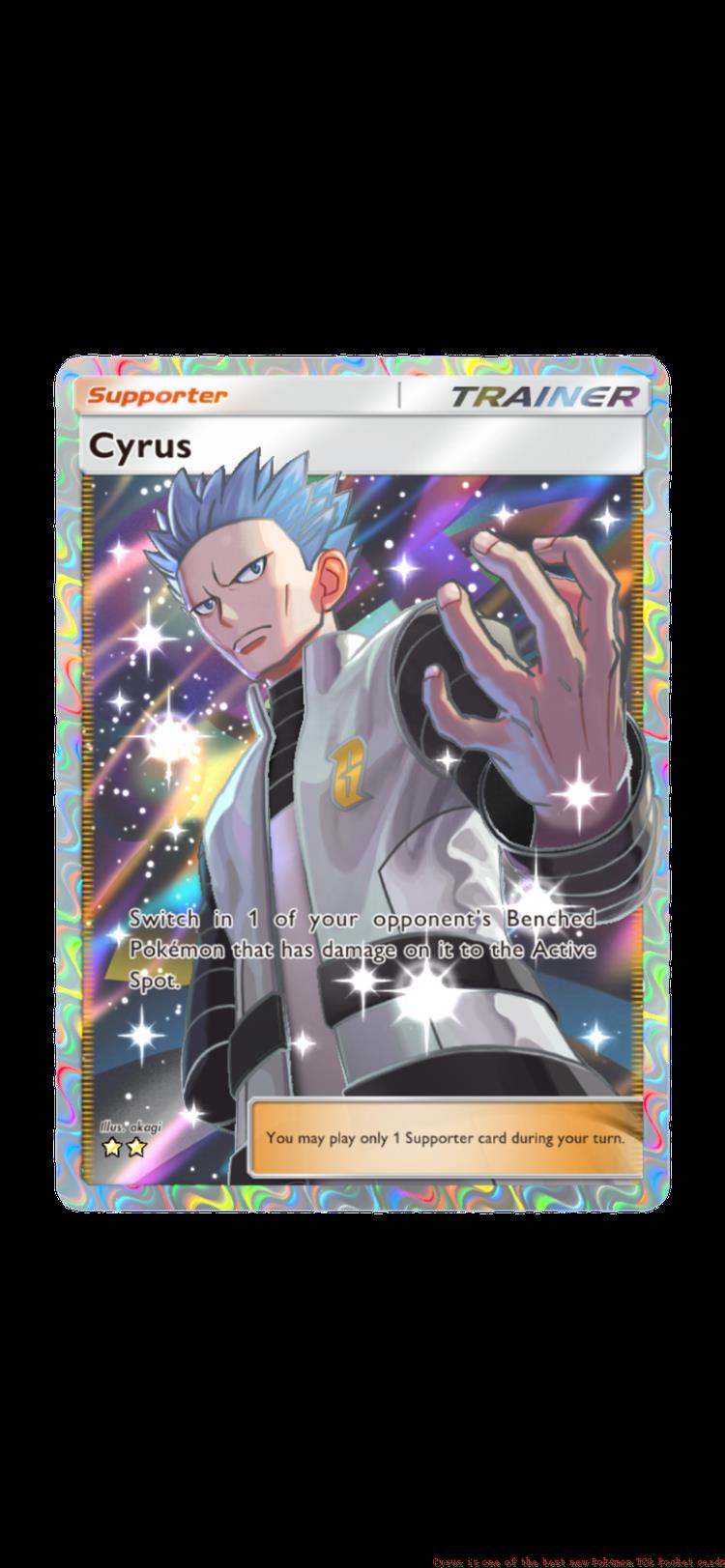
Image: Creatures Inc., DeNA/The Pokémon Company via Polygon
The critical distinction emerges when comparing Cyrus to Sabrina. While Sabrina forces opponent switching, it preserves the opponent’s choice in selection. Cyrus removes this agency entirely, allowing you to dictate exactly which damaged Pokémon faces imminent elimination. This selective targeting proves devastating against carefully constructed retreat strategies.
Stall decks utilizing Druddigon’s Rough Skin ability combined with Rocky Helmet Tool Cards become particularly vulnerable to Cyrus disruption. These strategies rely on controlled damage exchange that collapses when key Pokémon cannot safely retreat.
Mastering Cyrus requires understanding optimal deployment windows and combo potential. The most effective Cyrus players utilize the card not as a standalone solution but as part of coordinated knockout sequences.
Combo Strategy: Pair Cyrus with cards that inflict bench damage to create guaranteed knockout chains. For example, using Articuno ex’s Blizzard to damage multiple benched Pokémon, then following with Cyrus to bring the most threatening damaged Pokémon active for a finishing attack. This two-turn sequence often results in multiple prize cards.
Timing proves equally crucial. Deploying Cyrus immediately after your opponent invests energy attachments or tool cards on a benched Pokémon maximizes resource denial. Forcing an expensive retreat cost after they’ve committed resources creates both immediate board advantage and long-term resource disparity.
Common Mistake: Many players activate Cyrus too early in the game before significant damage accumulation. Waiting until mid-to-late game when multiple Pokémon have sustained damage ensures maximum target selection and knockout potential.
Deck construction should consider Cyrus’s energy requirements and slot efficiency. While he consumes valuable deck space, the consistent disruption against popular meta strategies justifies inclusion in most competitive decks focusing on positional advantage.
Even experienced players frequently misapply Cyrus’s capabilities, reducing his potential impact. Understanding these common errors significantly improves your success rate with this powerful trainer card.
Target Selection Errors: Choosing the wrong damaged Pokémon to force active represents the most frequent mistake. Prioritize targets that your opponent has invested significant resources in, or those with retreat costs they cannot afford. Avoid targeting Pokémon that benefit from being active or have abilities that activate upon switching.
Timing Missteps: Playing Cyrus when your opponent has minimal damaged Pokémon or when you lack finishing power wastes the card’s potential. Similarly, using Cyrus too late in the game when prize cards are limited reduces his strategic value.
Resource Mismanagement: Including Cyrus without supporting damage spread capabilities diminishes his effectiveness. Ensure your deck contains reliable methods to damage benched Pokémon through attacks, abilities, or other trainer effects to maximize Cyrus activation opportunities.
Advanced players should also consider opponent psychology. The threat of Cyrus can influence opponent behavior even when not played, causing them to make suboptimal decisions to avoid creating vulnerable bench situations.
Action Checklist
- Identify decks running Cyrus-vulnerable strategies (stall, glass-cannon)
- Practice Cyrus timing with spread damage cards like Articuno ex
- Master target selection prioritizing high-investment opponent Pokémon
- Incorporate Cyrus mind games into your bluffing strategies
No reproduction without permission:Game Guides » Cyrus is one of the best new Pokémon TCG Pocket cards Master Cyrus trainer card strategies to dominate Pokémon TCG Pocket with advanced bench control tactics