
TL;DR
- Enter clinch by blocking then stepping forward during enemy attack recovery
- Success depends on Strength, Weapon Skill, and Stamina vs opponent stats
- Yellow highlighted directions offer highest damage potential in grappling
- Use clinches to regenerate stamina and prevent enemy special moves
- Practice unarmed first to master mechanics before applying to armed combat
Games and Esports Articles
Clinch engagements represent a specialized close-quarters combat scenario within Kingdom Come: Deliverance 2‘s realistic fighting system. When combatants move within grappling distance, the standard combat rules undergo significant modifications while maintaining the core directional attack framework. This comprehensive guide delivers actionable strategies to transform clinch situations from confusing encounters into decisive victory opportunities.
Understanding clinch dynamics requires recognizing that this mechanic simulates medieval grappling techniques where fighters would close distance to gain positional advantages. The system intentionally creates a high-risk, high-reward scenario that rewards tactical awareness and proper timing execution.
Initiating a clinch requires precise positioning and timing rather than brute force approaches. Simply advancing toward opponents typically triggers defensive retreat behaviors, making direct approaches ineffective against aware enemies.
The most reliable clinch entry method involves defensive counter-movement: successfully block an incoming attack, then immediately execute a forward shift-step during the opponent’s recovery animation. This capitalizes on the brief vulnerability window when enemies reset their combat stance.
A critical limitation governs clinch accessibility: both participants must share equivalent armament status. Mixed engagements where one combatant wields weapons while the other fights unarmed will never trigger grappling sequences, as the game maintains historical realism regarding weapon reach advantages.
Common entry failures occur when attempting clinches during active enemy attack animations or when facing opponents with significant stat advantages. Recognizing these limitations early prevents wasted stamina and positioning errors.
The clinch interface utilizes the familiar directional combat reticle but introduces specialized mechanics the game never explicitly explains. Your grappling effectiveness derives from three primary attribute comparisons: Strength determines physical dominance, Weapon Skill influences technical execution, and current Stamina levels affect endurance during the struggle.
Statistical testing reveals dramatic performance variations based on equipment proficiency. Switching from a mastered weapon (25 Swordsmanship) to an unfamiliar one (9 Heavy Weapons) can reduce success rates by over 60% against identical opponents. This emphasizes the importance of specialization in KCD2’s combat system.
During active clinches, the attack reticle displays complex visual feedback. Grey segments indicate standard attack opportunities, while yellow-highlighted directions signal optimal strike paths with significantly increased damage potential and special effect triggers.
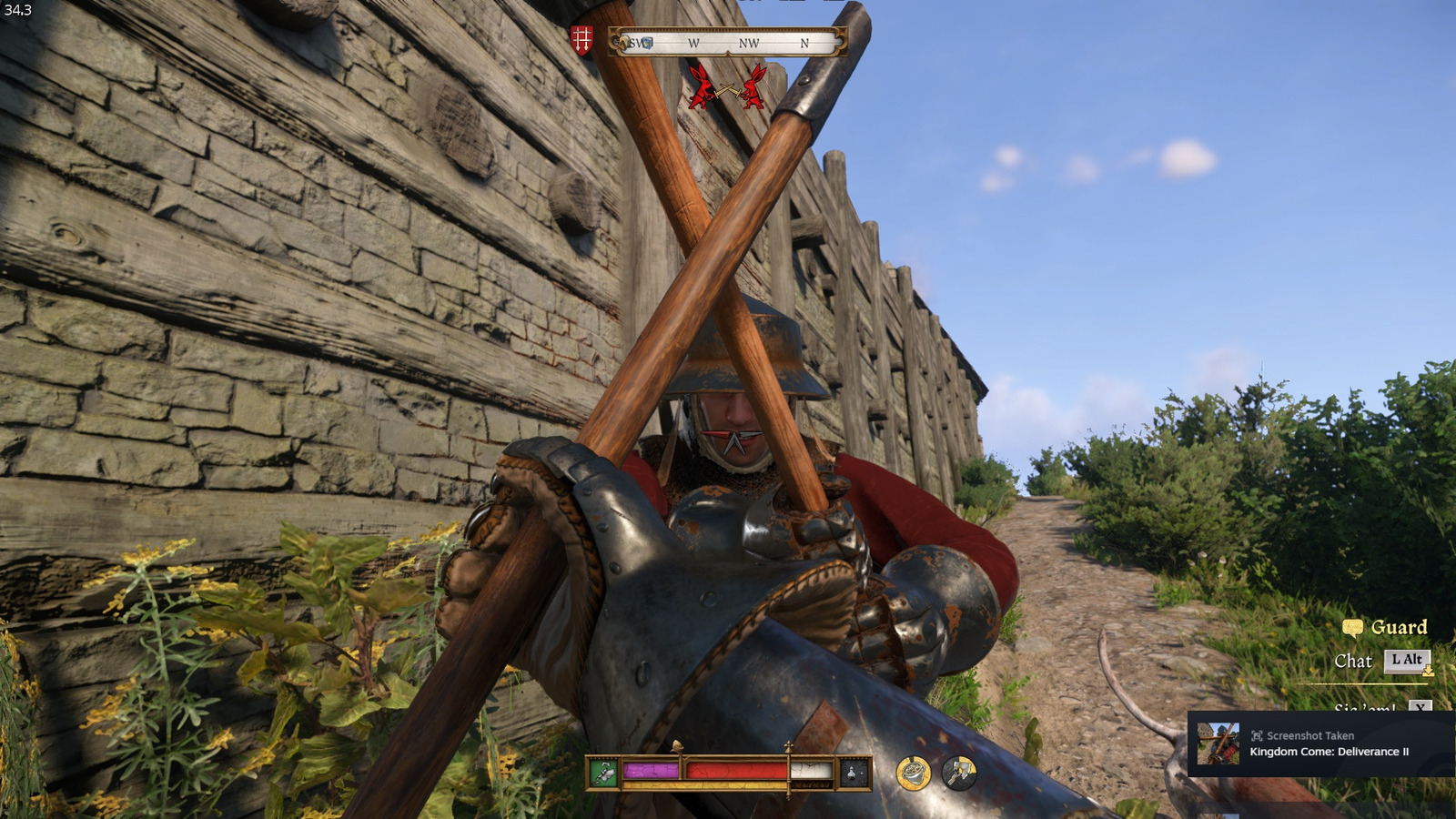
Downward attacks frequently execute stance-breaking kicks that create opening for follow-up strikes or even weapon disarming maneuvers. This multi-layered reticle system rewards observational skills and adaptive combat strategies.
Clinching provides exceptional tactical advantages by neutralizing enemy special abilities. Opponents cannot execute Master Strikes or advanced combat techniques while grappled, creating safe engagement windows for aggressive players.
The stamina regeneration during clinches represents a crucial strategic element often overlooked by novice fighters. This allows you to recover combat endurance while simultaneously pressuring opponents, creating sustainable engagement patterns throughout extended battles.
Armed clinches feature predictable combo patterns that, when mastered, deliver devastating concluding strikes. The most common armed sequence concludes with a powerful head strike that frequently decides encounters—ensure you complete this finishing move when the opportunity arises.
Perfect blocks and well-timed attacks during clinches create free strike opportunities that bypass normal defense mechanics. These moments represent perfect opportunities to inflict significant damage or create disarming scenarios.
Mastering clinch mechanics begins with dedicated unarmed practice sessions. Fist-fighting provides clearer feedback on mechanic execution and allows experimental technique development without weapon damage variables complicating the learning process.
Consistently varying attack directions during animations reveals different grappling outcomes and finishing moves. This experimental approach builds comprehensive understanding of the clinch system’s depth and variability.
Advanced applications include using clinches as defensive reset tools during difficult engagements, creating stamina recovery opportunities while preventing enemy momentum building.
For those seeking to expand their combat repertoire beyond grappling, our Class Guide provides detailed analysis of character specialization options that complement close-quarters fighting styles.
Action Checklist
- Practice defensive timing against weak opponents to master the block-and-step entry technique
- Experiment with different weapon types to understand proficiency impact on clinch success
- Master reticle interpretation by noting yellow highlight patterns across multiple engagements
- Develop stamina management strategies by intentionally using clinches for recovery during extended combat
- Integrate clinching into broader combat flow by combining with perfect blocks and follow-up strikes
No reproduction without permission:Game Guides » Guide to clinching in KCD2. How to enter and win clinch, how grappling works in Kingdom Come 2 Master KCD2 clinch mechanics with expert strategies for entering, winning, and dominating close-quarters combat