
TL;DR
- Tatsugiri makes its regional-form debut requiring specific raid strategies
- Premium research offers limited value beyond the exclusive ice cream pose
- Rainy Lure Modules provide 4x duration bonus for water-type farming
- Shiny Staryu and Tirtouga have significantly boosted encounter rates
- Scarf Lapras raids offer exclusive seasonal background rewards
Tatsugiri Arrives in Pokémon Go with Regional Variations
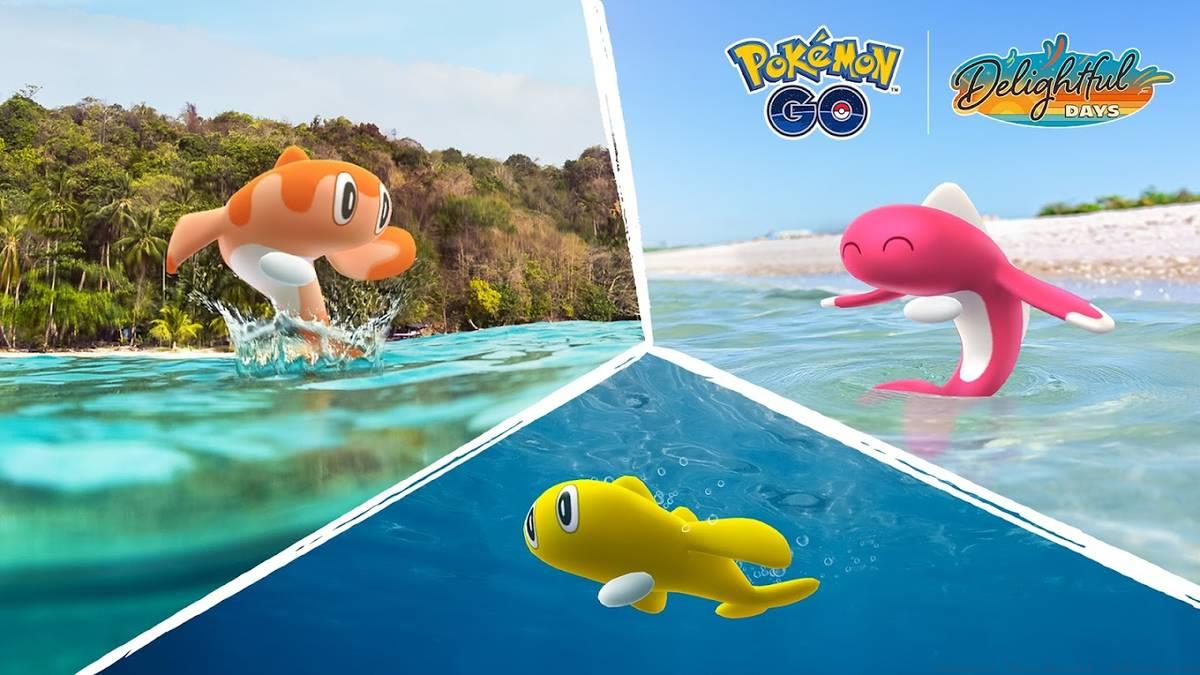
Pokémon Go’s annual Water Festival celebration returns for 2025, scheduled from July 15-20, bringing aquatic Pokémon to the forefront. This year’s standout feature is the debut of Tatsugiri, the sushi-inspired Pokémon originating from Paldea. Unlike typical spawns, Tatsugiri exclusively appears in raids, with its three distinct forms geographically locked to specific regions—adding strategic complexity to completion efforts.
Beyond the new addition, trainers benefit from enhanced Rainy Lure Modules that remain active for two hours instead of the standard 30 minutes—a 400% duration increase. Additional bonuses include extra candy for successful nice, great, or excellent throws, plus elevated shiny odds for both Staryu and Tirtouga. Raid encounters with the scarf-wearing Lapras variant may reward participants with a special seasonal background, providing cosmetic customization options.
This comprehensive guide examines every aspect of the Water Festival 2025, including premium research evaluation, collection challenge strategies, and optimized farming techniques for maximum efficiency.
The “Happiness in Every Scoop” premium research track offers exclusive rewards for $4.99, featuring a unique character pose depicting ice cream consumption alongside various Pokémon encounters. Understanding the value proposition requires careful assessment of both immediate and long-term benefits.
Research Task Breakdown:
- Catch 5 water-type Pokémon (Staryu encounter)
- Catch 10 water-type Pokémon (Feebas encounter)
- Catch 15 water-type Pokémon (1 Premium Battle Pass)
- Evolve a Pokémon (Clamperl encounter)
Value Assessment: The premium research primarily justifies its cost through the exclusive ice cream pose rather than the encounter rewards. Staryu, Feebas, and Clamperl encounters are readily available through other event activities, while the single Premium Battle Pass represents approximately $1 value. For completionists seeking cosmetic items, the purchase may be warranted, but trainers focused on Pokémon acquisition should prioritize free event content.
Strategic Recommendation: Consider purchasing only if you actively use character poses and have disposable PokéCoins. The research doesn’t expire until the event concludes, allowing time evaluation of free reward acquisition before committing funds.
Water Festival Collection Challenges task trainers with assembling specific water-type Pokémon teams within the event timeframe. These time-limited objectives typically require catching or evolving particular species, with rewards including Stardust, experience points, and occasionally rare items.
Completion Strategy: Focus on overlapping objectives—many Collection Challenge requirements align with Field Research tasks and naturally occurring spawns. Prioritize Pokémon that require evolution by stocking candy in advance, and use Pinap Berries during catches to accelerate candy accumulation. The boosted water-type spawn rates during the event significantly reduce completion difficulty.
Common Pitfall: Avoid using rare candies for evolution requirements unless immediately necessary before event conclusion. Most Collection Challenge Pokémon appear frequently enough during the festival to obtain necessary candy through natural gameplay.
Event-exclusive Field Research tasks provide recurring opportunities for valuable encounters and items throughout the Water Festival. These tasks refresh daily and upon completion, offering sustainable reward streams for active trainers.
Task Optimization: Strategically manage your Field Research inventory by prioritizing tasks with rare rewards like Staryu and Tirtouga encounters (with boosted shiny rates) over common items. Tasks requiring specific throw types pair well with the event’s increased candy bonus for nice throws or better.
Efficiency Technique: Complete easier tasks immediately to free inventory slots for potentially better rewards. Since PokéStops provide different research tasks each day, visiting multiple locations increases reward variety. Coordinate with local trainers to identify stops offering premium tasks.
Advanced Strategy: Save completed but unclaimed research tasks until after activating a Star Piece or Lucky Egg to maximize Stardust and experience gains from turn-in rewards.
Raid battles during the Water Festival feature aquatic Pokémon across different difficulty tiers, with Tatsugiri appearing as a regional-exclusive one-star raid boss. Understanding raid mechanics and preparation requirements ensures efficient resource utilization.
|
One-star raids |
Three-star raids |
|---|---|
|
Shellder |
Kingler |
|
Ducklett |
Gyarados |
|
Tatsugiri |
Lapras (scarf) |
|
Azumarill |
Tatsugiri Regional Mechanics: The three Tatsugiri forms (Curly, Droopy, Stretchy) appear in different geographical regions. Research local distribution patterns and coordinate with trainers in other regions via remote raiding to complete your Pokédex. One-star raids are soloable, making Tatsugiri accessible without raid groups.
Scarf Lapras Value: The costume Lapras offers exclusive seasonal background rewards upon capture, with estimated drop rates between 5-10% based on historical costume Pokémon data. While three-star raids require small groups, the potential cosmetic reward justifies multiple attempts for collectors.
Team Composition: Electric and Grass-type Pokémon dominate raid counters. Zarude, Zekrom, Roserade, and Tangrowth provide optimal performance against most water-type raid bosses. Prepare teams in advance to minimize lobby time and maximize daily raid efficiency.
Water-type Pokémon spawn rates receive significant amplification during the festival, creating ideal conditions for candy farming, evolution completion, and shiny hunting. Strategic location selection and item usage dramatically increase efficiency.
Biome Prioritization: Natural water biomes (near oceans, rivers, lakes) and parks with water features provide the highest concentration of desirable spawns. Urban areas with multiple PokéStops and gyms also benefit from increased event spawn points.
Lure Module Optimization: The extended Rainy Lure Module duration (2 hours) makes them exceptionally cost-effective during this event. Stack lure modules at clustered PokéStops to create farming hotspots, ideally during weather-boosted conditions for additional candy and Stardust bonuses.
Shiny Hunting Strategy: Staryu and Tirtouga feature noticeably improved shiny rates during the event, estimated at approximately 1 in 64 based on previous water festival data. Focus catch efforts on these species when they appear, using Quick Catch techniques to maximize encounter volume.
Incense Efficiency: Regular Incense attracts water-type Pokémon every 60 seconds while moving, or every 5 minutes when stationary. Combine Incense with walking routes through water biomes for optimal spawn frequency during the event’s duration.
Action Checklist
- Identify local Tatsugiri form and plan remote raids for other regions
- Complete all free Collection Challenges before considering premium research
- Farm Staryu and Tirtouga encounters for boosted shiny chances
- Use Rainy Lure Modules in clustered PokéStop areas for maximum efficiency
- Battle scarf Lapras raids for seasonal background reward chance
No reproduction without permission:Game Guides » Pokémon Go ‘Water Festival’ 2025 event guide Complete guide to Pokémon Go Water Festival 2025 with debut strategies, raid tactics, and premium research analysis