
TL;DR
- Episode 5 Act 3 likely launches October 18 based on Battle Pass ending October 17
- New agent Harbor brings water-based abilities and Indian cultural representation
- Team Deathmatch mode introduces 100-kill win condition for faster-paced gameplay
- In-game tournaments mirror League of Legends Clash system with rank-based divisions
- 2023 esports ecosystem creates clear pathway from amateur to professional competition
Games and Esports Articles Valorant
Valorant’s current Episode 5 Act 2 is approaching its conclusion, setting the stage for Act 3’s imminent arrival. The gaming community has been buzzing with leaked details about the upcoming Indian agent Harbor and significant gameplay enhancements. This comprehensive breakdown organizes all confirmed information and credible rumors to prepare you for what’s coming next in Riot’s tactical shooter.
While Riot Games hasn’t officially confirmed the exact release date for Act 3, we can make educated predictions by examining the Battle Pass expiration date of October 17. Historical patterns suggest the development team typically launches new acts either on the same day or the following day, making October 18 the most probable launch window. However, players should remain aware that unexpected delays can occur due to technical issues or last-minute balancing requirements.
All Valorant roster moves, rumors, leaks before VCT 2023. Rostermania time
The big franchising reshuffle.
Harbor, also known by codenames Mage and his real identity Varun Batra, represents the twenty-first agent joining Valorant’s diverse roster. Extensive community speculation and official teasers have revealed several key characteristics: he originates from India, sports a distinctive biker-inspired aesthetic, and wields hydrokinetic abilities to manipulate water elements on the battlefield. Early indications suggest his kit may include defensive capabilities that could potentially intercept or neutralize projectile attacks, adding a new tactical dimension to site executes and post-plant scenarios.
From a strategic perspective, Harbor appears positioned as a controller agent, potentially filling gaps in the current meta for area denial and vision obstruction. His water-based abilities might create temporary barriers, obscure sightlines with mist effects, or provide unique repositioning opportunities through liquid mobility. Players should prepare to experiment with his kit during the first week to understand optimal team compositions and counter-play strategies.
What we know about Valorant next agent 21 Harbor: leaked abilities, name, role, release date
Valorant geography expands to India?
Back in August, the prominent Valorant Leaks Twitter account revealed details about an upcoming team deathmatch variant for Valorant. This new mode will feature teams competing to achieve 100 total eliminations for victory, providing a faster-paced alternative to the standard plant/defuse format that emphasizes pure mechanical skill and target acquisition over tactical executes.
Another significant development involves integrated tournaments for casual and competitive players, leaked by the same reliable source. These competitions will implement a tiered division system likely correlated with players’ competitive rankings, commencing from a predetermined skill threshold. Participation rewards players with exclusive cosmetic points and potential rank progression opportunities unavailable in standard matchmaking.
Riot Games has successfully deployed comparable tournament infrastructure in League of Legends through their Clash system, making its adaptation to Valorant a logical evolution. The bracket visualization provided by Riot illustrates how these competitions could structure matchmaking and progression pathways.
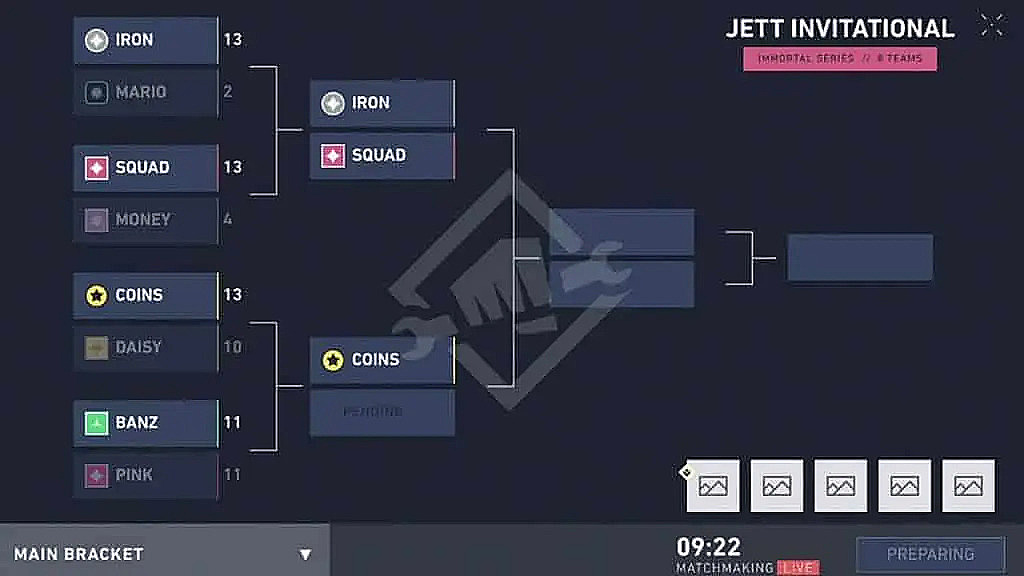
The most compelling aspect of these integrated tournaments lies in their potential integration with Valorant’s global VCT ecosystem. During their 2023 season announcement, developers presented the competitive landscape as a hierarchical pyramid with multiple competition tiers operating within a unified framework. The foundational level, designated “Path to Pro,” appears designed as an amateur competitive structure accessible directly through the client.
- Path to Pro: competitive tournaments extending beyond Radiant rank that serve as proving grounds for aspiring professionals
- Game Changers, Third-Party Tournaments, and Domestic Leagues
- International leagues
- Global Events: Masters and Champions
This structured approach creates clear advancement opportunities for players at all skill levels, from casual competitors to aspiring professionals. The ecosystem design ensures talent can be identified and developed through visible competitive pathways rather than relying solely on ranked ladder performance. Organizations can scout talent more effectively while players understand exactly what achievements are necessary to reach each subsequent competitive tier.
For players aiming to transition from amateur to professional competition, understanding this ecosystem is crucial. The Path to Pro system specifically addresses the gap between high-ranked matchmaking and organized competitive play, providing the intermediate step many talented players have been missing.
NeL: G2 missed on Valorant franchising slot due to Andrew Tate controversy
Action Checklist
- Complete current Battle Pass objectives before October 17 expiration
- Study Harbor’s leaked abilities and plan initial team compositions
- Practice aim and movement for new Team Deathmatch mode
- Research current meta and identify potential Harbor counters
- Form tournament-ready team and establish role assignments
No reproduction without permission:Game Guides » What will be in Valorant Episode 5 Act 3: new agent, release date, other leaks and rumors Complete guide to Valorant Episode 5 Act 3: New agent Harbor, release date predictions, game modes, and esports updates