
TL;DR
- Nafany employs highly structured leadership requiring close player monitoring in BetBoom’s new roster
- Team Spirit collapsed due to eroding confidence and roster instability before major tournaments
- CS2’s 64-tickrate causes significant bullet registration issues frustrating professional players
- BetBoom qualified for IEM Sydney through sheer motivation despite limited team practice time
- The team approaches Sydney with zero pressure, aiming to eliminate top competitors systematically
Games and Esports Articles CS 2
BetBoom Team has rapidly emerged as one of Counter-Strike’s most compelling stories, dominating the qualification process for IEM Sydney 2023 while establishing themselves as serious contenders from the tournament’s opening matches. In an exclusive discussion preceding the event, journalist Roman Petukhov engaged with BB’s rifler Pavel “s1ren” Ogloblin regarding nafany’s captaincy methodology, the disintegration of Team Spirit’s former lineup, and naturally, the transition to CS2’s competitive landscape.
— Some people see BetBoom Team as a squad of losers who has nothing to lose. How accurate it is?
— The characterization contains partial validity, though I personally reject the ‘loser’ identity classification. My driving motivation centers on demonstrating capability for championship-level performances at elite tournaments. Every BetBoom member who experienced roster removal from previous organizations shares this identical ambition. We’re collectively determined to establish that we can achieve remarkable competitive accomplishments.
Pro Tip: When joining a new team after being dropped, focus on converting perceived disadvantages into motivational fuel rather than internalizing negative labels.
— What’s nafany’s leadership like? For example, Hobbit said it’s about creativity and more fluid approach.
— His methodology emphasizes organizational precision and disciplined structure, eliminating chaotic elements completely. Nafany maintains constant oversight of each player’s performance and decision-making. Within this roster configuration, he lacks established star performers like Ax1Le or sh1ro who previously provided autonomous initiative. This necessitates intensified player supervision, partially attributable to our recent team formation timeline.
We’re currently developing our strategic foundation systematically. Certain match victories become achievable through pure determination rather than tactical superiority. The IEM Sydney qualification provides perfect illustration: we secured the decisive Anubis map victory through exceptional team morale rather than structural advantages. Despite minimal specific map preparation, we achieved qualification success. Our recently assembled squad maintained extraordinary motivation levels. Earning placement in such a prestigious tournament generates tremendous excitement!
Common Mistake: New teams often over-structure early development, neglecting the crucial balance between system building and morale cultivation.
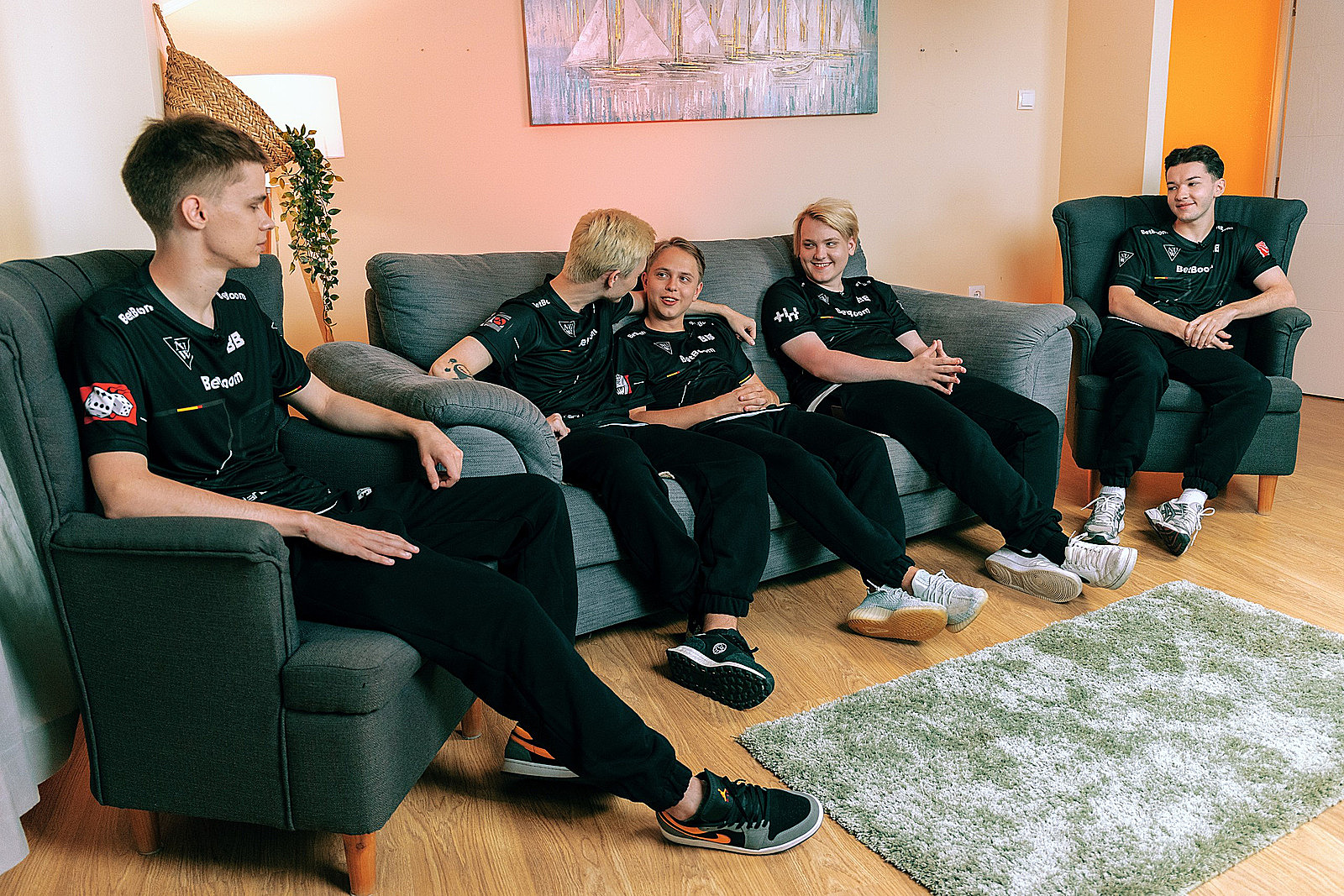
— Describe your teammates.
— KaiR0N demonstrates unstoppable momentum, truly relentless in competitive scenarios. Danistzz lacks extensive experience but exhibits rapid learning capacity. He genuinely shows substantial developmental progress consistently. Zorte maintains strong independent perspectives. He contributes significantly during tactical discussions and strategy sessions. Nafany consistently proves himself as an exceptional in-game leader, requiring minimal additional description.
Advanced Insight: Successful new rosters require identifying each player’s unique contribution style—whether analytical, aggressive, or supportive—to maximize collective performance.
Valve developer denies rumors about config removal in CS2
— What went wrong in Team Spirit? Why couldn’t you recreate the success of Rio and Antwerp?
— Our previous lineup operated with mutual trust as its foundation. Every member understood that tactical errors would receive immediate teammate support. However, arriving at the RMR preceding Paris Major revealed clear team fragmentation, with impending roster changes becoming apparent. This exact scenario materialized eventually. Performance pressure intensified dramatically. The original confidence between players disappeared completely.
Following Antwerp, we received direct invitations to tier-1 competitions, but changing our primary AWPer necessitated reformulating team dynamics and rebuilding coordination. We approached Rio in optimal competitive condition, having secured a minor tournament victory immediately before the major, generating substantial confidence. However, preceding Paris we lost consistently without securing any tournament victories. Team confidence evaporated entirely.
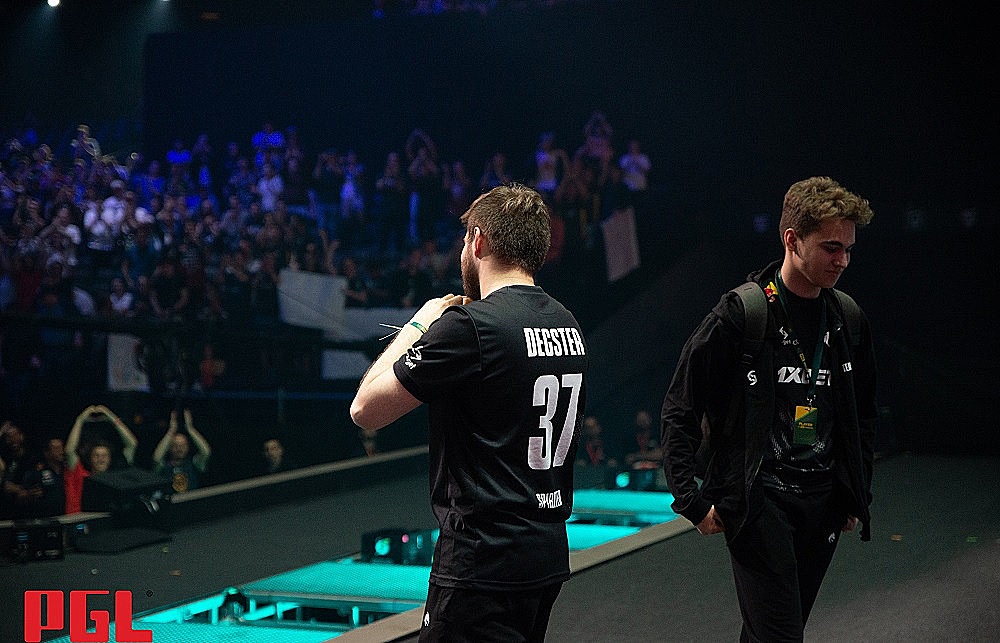
— What does it feel like to be kicked from a team?
— Unexpected roster removal generates significant emotional impact. I absolutely didn’t anticipate this development.
— How did you deal with it?
— Perhaps we should omit this segment [laughs]. The renowned Serbian establishments. Actually, nothing particularly extraordinary occurred.
NiKo: “I feel like the AWP is probably the most balanced in CS2”
On CS2 and IEM Sydney
— Did the team started training in CS2 right after the release?
— We awaited ESL’s official transition announcement. Meanwhile, we completed existing online tournament commitments, making premature CS2 transition strategically unwise before official release.
The game versions share similarities but diverge in specific technical aspects. Certain adjustments prove challenging to integrate, while others transition more smoothly. However, the version switch didn’t impact our team coordination significantly.
— What details are different?
— Primarily server tickrate functionality. In CS2’s current build, projectiles occasionally fail to register correctly. This represents the most frustrating technical deficiency. Player collision mechanics also create annoyance, particularly when teammates displace positioning unexpectedly. We frequently vocalize frustration about these issues!
— Tickrate is really that important?
— Valve prohibiting FACEIT from implementing 128-tick servers demonstrates questionable decision-making. They apparently prioritize their Premier mode adoption despite significant cheating prevalence. The environment becomes unplayable competitively. Recently, I initiated a match before bedtime. I encountered five Russian cheaters opposing me. I immediately abandoned the session. I believe professional competitors will persist with FACEIT platforms. Valve’s matchmaking system maintained poor quality previously and continues unchanged.
Technical Analysis: The shift from 128-tick to 64-tick servers impacts spray patterns, movement mechanics, and peekers advantage calculations significantly.
— Sydney is the first LAN in CS2. Do you think it will be random?
— Probability strongly suggests unpredictable outcomes. Competitors accumulating maximum playtime, discovering technical advantages, and adapting thoroughly will achieve victory. Consequently, we dedicate all available time to CS2 mastery. Based on practice sessions, overall performance appears quite promising. However, minor individual performance inconsistencies require attention. We still need additional deathmatch practice sessions.
— Is there additional pressure due to Sydney being your first big tournament but also the first CS2 LAN?
— We maintain complete relaxation, experiencing zero performance pressure. As our captain emphasizes, we approach the tournament with straightforward elimination objectives against elite opponents.
— Do you want to knock out someone in particular?
— Most likely Cloud9. For nafany, to demonstrate his exceptional leadership capabilities. I’ll compete dedicatedly for my captain’s strategic vision.
BetBoom Team formed merely 2.5 months before IEM Sydney and secured qualification through open qualifiers just days following the official roster announcement. Their competitive debut progresses successfully thus far, having earned playoff qualification at IEM Sydney. They confront Complexity for semifinal advancement on October 20.
Strategic Insight: New teams should prioritize qualifying for major tournaments early to build confidence and establish competitive reputation, similar to BetBoom’s approach with our Complete Guide methodology for systematic development.
NiKo: “I feel like the AWP is probably the most balanced in CS2”
Action Checklist
- Establish clear leadership structure with defined player monitoring systems
- Balance tactical system development with morale cultivation in new rosters
- Identify individual player strengths and contribution styles for optimal team synergy
- Develop CS2 adaptation plan focusing on tickrate differences and movement mechanics
- Create tournament qualification strategy leveraging motivation over extensive preparation
- Implement confidence maintenance protocols to prevent Team Spirit-style collapse
No reproduction without permission:Game Guides » “Everything is structured and strict, there’s no chaos. Nafany keeps an eye on every player”. S1ren on leadership in BetBoom Team, IEM Sydney, and Team Spirit’s slumpExclusive BetBoom Team's s1ren reveals structured leadership, CS2 challenges, and team dynamics insights for competitive players