
TL;DR
- All three starters offer balanced viability with distinct evolution paths and Mega Evolutions
- Early game type coverage is less critical due to additional starter availability
- Team composition planning should focus on long-term synergy rather than immediate advantages
- Post-game completion allows obtaining the other two starters you didn’t choose initially
- Mega Evolution capabilities significantly impact late-game battle performance
Facing the classic Pokémon dilemma: Chikorita, Tepig, or Totodile? This initial selection will shape your entire adventure through Lumiose City’s urban redevelopment.
Your starter Pokémon decision in Pokémon Legends: Z-A represents one of the most impactful early-game choices, setting the foundation for your entire journey. Chikorita brings botanical charm as a delightful plant creature, Tepig offers fiery enthusiasm as your porcine companion, and Totodile delivers aquatic ferocity as an energetic crocodile. Each presents unique advantages that merit careful consideration.
While no single choice provides a definitive advantage in Pokémon Legends: Z-A, this guide delivers comprehensive insights to inform your partnership selection, including detailed evolution pathways and their powerful Mega Evolution transformations.

The three available starter Pokémon in Pokémon Legends: Z-A offer distinct strategic approaches:
Historical Pokémon titles often featured starter Pokémon that provided significant advantages during specific game segments when maintained in your active party. While all starter Pokémon eventually evolve into formidable partners, previous installations like Pokémon Diamond and Pearl demonstrated situations where fire-type scarcity made selecting the fire-type starter almost essential. Pokémon Legends: Z-A diverges from this pattern by providing abundant Pokémon diversity accessible throughout your adventure.
The evolutionary journeys and Mega Evolution capabilities significantly differentiate these starters in late-game scenarios. Understanding these transformations is crucial for long-term team planning.
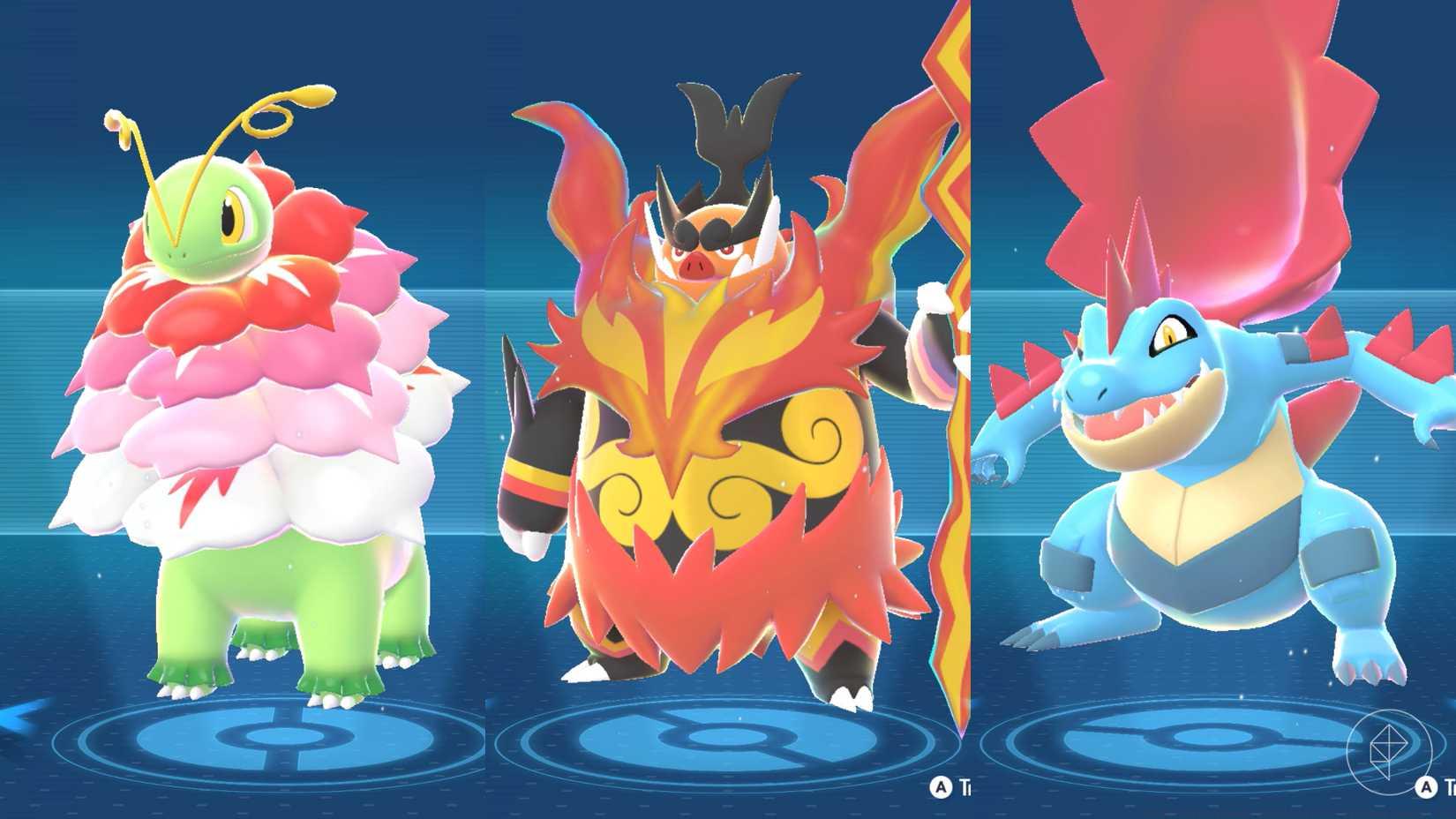
Graphic: Julia Lee/Polygon | Source images: Game Freak/Nintendo, The Pokémon Company via Polygon
Mega Evolution introduces transformative battle capabilities for all three starters. Mega Meganium typically gains enhanced defensive capabilities and supporting movesets, making it ideal for sustained battles. Mega Emboar often receives massive attack boosts and coverage moves that compensate for its defensive weaknesses. Mega Feraligatr commonly acquires overwhelming physical attack stats and speed improvements, enabling devastating sweep potential.
Traditional gym leader structures are absent in this installment, replaced by trainers fielding diverse Pokémon type combinations (with occasional specialists like Corbeau and his poison-type team). Consequently, none of the three starter choices dramatically impacts game difficulty. These specialized trainers primarily appear in mid-to-late game segments, providing ample opportunity to develop counter strategies.
Early accessibility to Kanto starters (Bulbasaur, Squirtle, and Charmander) plus complete Kalos starter sets (Chespin, Fennekin, and Froakie) minimizes concerns about type coverage gaps in your team composition. For completionists concerned about missing content, the post-game after credits enables acquisition of the two unchosen starters.
Strategic team construction in Pokémon Legends: Z-A requires considering type coverage, move compatibility, and long-term evolution synergies. Your starter choice should complement your preferred battle style and team architecture.
Selecting Chikorita works excellently with teams needing defensive stability and status support. Its grass typing pairs well with fire and water types from other generations, creating balanced defensive coverage. Consider pairing with Pokémon that cover its fire, ice, and flying weaknesses for optimal performance.
Choosing Tepig suits aggressive playstyles favoring powerful offensive pressure. Its fire typing combines effectively with rock and ground types that resist its water, ground, and rock vulnerabilities. Tepig excels in teams designed for quick opponent elimination rather than prolonged engagements.
Opting for Totodile facilitates balanced teams requiring physical attacking power and type versatility. Its water typing synergizes with grass and electric types that address its grass and electric weaknesses. Totodile performs exceptionally in versatile teams capable of adapting to multiple battle scenarios.
For comprehensive team-building strategies beyond starter selection, our Class Guide provides detailed analysis of optimal Pokémon combinations and battle formations.
Beyond basic type advantages, several advanced considerations can influence your starter selection for specialized playthroughs and competitive preparation.
For Nuzlocke challenge runs, Totodile’s balanced stats and fewer type weaknesses provide superior survival potential. Its evolution line maintains consistent performance throughout the game with fewer risky matchups. Chikorita requires more careful team support but offers invaluable healing capabilities in extended battles.
Speedrun strategies typically favor Tepig for its high damage output and favorable matchups against early-game opponents. Its evolution line delivers consistent offensive pressure that accelerates battle resolution. However, route planning must account for water-type challenges before acquiring counter options.
Competitive breeding considerations reveal that all three starters offer valuable egg moves and ability combinations. Chikorita provides supporting movesets for defensive teams, Tepig delivers powerful physical attacks, and Totodile offers coverage moves that surprise conventional counters. For detailed competitive strategies, consult our Complete Guide to advanced battle techniques.
Movepool analysis indicates significant differences in technical machine compatibility. Tepig accesses diverse coverage moves early, while Totodile develops more varied movesets mid-game. Chikorita’s support move accessibility makes it valuable for complex battle strategies requiring status effects and healing.
Understanding these nuanced differences ensures your starter selection aligns with both immediate preferences and long-term objectives. For additional weapon and ability optimization strategies, our Weapons Unlock guide provides parallel principles for team enhancement.
Action Checklist
- Analyze your preferred battle style (defensive, offensive, balanced) before selecting
- Plan your early team composition around covering starter weaknesses
- Research Mega Evolution requirements and prepare necessary items
- Capture complementary Kanto and Kalos starters for type coverage
- Develop counter strategies for specialist trainers like Corbeau
No reproduction without permission:Game Guides » Which starter Pokémon should you pick in Pokémon Legends: Z-A? Complete guide to choosing your Pokémon Legends: Z-A starter with evolution paths, battle strategies, and team-building tips